In the pre-refrigeration era, pork was preserved in large wooden barrels of brine. To increase the plantations slave’s loyalty to their masters, the antebellum slaveowners would periodically gather their slaves together and roll out a barrel stuffed with pork towards them. Being such a rare delicacy at the time, the slaves would scramble and fight with each other as they cast their famished bodies into the porcine feast to assuage their hunger. This faux act of generosity from their well-fed masters forced the slaves to demonstrate just how loyal they were by unquestioningly doing their masters bidding.
This act was extended to voters in America in the 1860s where the U.S. Treasury was metaphorically referred to as the pork barrel. Politicians running for elective office would promise benefits from state resources to their local constituents in return for their votes.
The public story
This has since become known as pork-barrel politics. It involves promises to spend large amounts of money in an area in order to make the local people more likely to vote for a particular politician or political party. This amounts to politically correct consumption where the goal of influencing public affairs is based on the belief that such an action will lead to a desirable societal change.
In practicing pork-barrel politics, the ruling party promises to channel public money to particular constituencies based on political considerations. The promised developments are meant to serve a limited population or special interest group in a particular area where the ruling party has high political interests in, yet the costs of those promised benefits are spread among all taxpayers.
Similar to the antebellum slaveowners who expected increased loyalty from the slaves in return for the salted pork, in pork barrel politics the ruling party expects majority votes for their party or their politician of choice, in return for the promised development benefits.
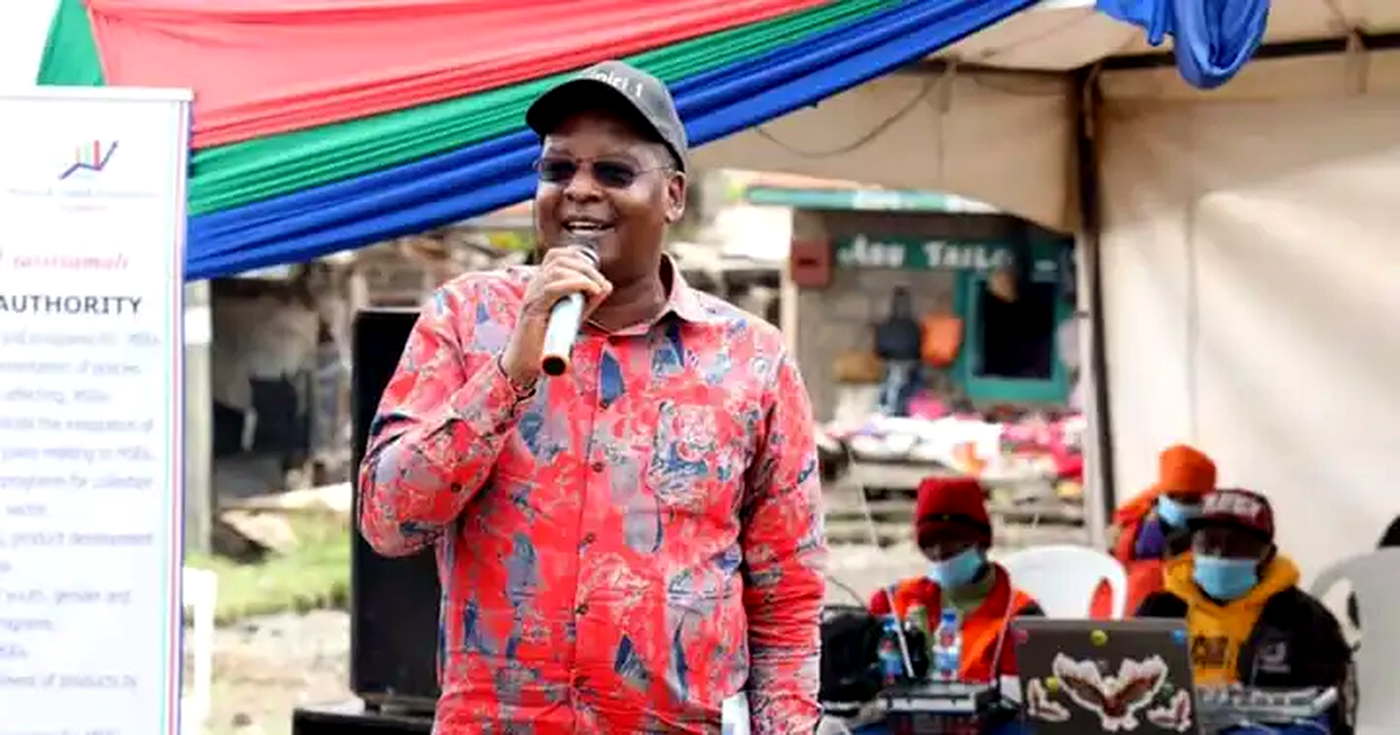
In recent days, we have witnessed pork-barrel politics in the upcoming Kiambaa constituency by-election. In one of the campaign speeches by Honorable Amos Kimunya, who is also the ruling party’s majority leader in the National Assembly, he unabashedly told the Kiambaa electorate that if they failed to vote for the Jubilee party candidate, Mr. Kariri Njama, in the up-coming elections, he would withdraw the Kshs 2 billion earmarked for rehabilitation of the roads in the said constituency.
He went further to state that if they went ahead and elected the opposition candidate, as the majority leader in parliament, he would not allocate him membership in any parliamentary committee. Mr. Kariri Njama is contending for the Kiambaa parliamentary seat against Mr. Njuguna Wanjiku who is vying on a United Democratic Alliance (UDA) party ticket.
Begs the question, will the Kiambaa electorate succumb to the promises of pork barrel projects in return for electing the ruling party’s candidate? Will they be entrapped by politically correct consumption? The jury on this is still out.
The deeper logic
I submit that this return to the pathway of pork barrel politics is a very slippery slope. It is ethically questionable because it leads to the abuse of power. For instance, last I checked, Kimunya does not have veto powers over the Kenya Roads Board, which is the institution that is mandated to oversee all the roads network in Kenya and coordinate their development, rehabilitation and maintenance. So, under what capacity would Kimunya withhold or redirect any funds earmarked for roads development in Kiambaa constituency, if not through intimidation and coercion?
When a society embraces pork barrel politics, the effect on the rest of the country is negative because all the tax payers shoulder the costs of these pork barrel projects, while the benefits are only localized to a specific area. In simple terms, the benefits are appropriated to a few, while the cost is distributed among the whole population.
This promotes favoritism and impartiality in a country whose latest political mantra has been unity of all tribes and regions, and incentivizes politicians to scramble for a large share of the public pie as possible for their respective political support base.
Once we accept this type of pork barrel politics, we automatically legitimize all state intervention through control and expropriation, and subsequently it becomes impossible to draw the line because all government intervention becomes justified as some alleged social good.
Have you ever wondered why most of the CDF projects in your village are sometimes left unfinished, under-utilized, not viable or unsustainable? This is because pork barrel projects are advanced and prioritized by politicos motivations, rather than by economic efficiency or competitiveness considerations. Resultantly, these projects slow down necessary market reallocation of resources that is imperative to maintain a healthy economy. In contrast, projects that are driven by the free-market economy reward efficiency, satisfy the consumers demands, and are a boost to national economic growth.
Every successive politician wants to outshine his predecessor, and therefore engages in, or promises projects that can be attributed to themselves, and hence helps them secure your vote. And because the electoral cycle is only five years, this yields an extremely short-sighted type of development that does not concentrate on programs that require a much longer time frame, for example education or health, which are the two basic tools for a healthy and vibrant population. Allow me to unpack this a little.
Most politicians will construct or promise to develop classrooms or health facilities. But these are simply basic structures. To develop education or health programs requires a complete set of inputs such as appropriate and competitive curriculum development, provision of adequate human resources, supplies and consumables, roads infrastructure, security, water, energy, etc.
So the next time your politician joyfully cuts a ribbon to open an empty classroom or dispensary that he has constructed using tax payers money, and in his speech says he has developed education or health in your village, take another look around, and kindly saunter away.
The final test
Pork barrel projects also compromise the independence and integrity of the politicians who accept them, whereas functional democracies devoid of politically correct consumption, keeps elected representatives on their toes, and the government more responsive to the needs of the electorate. So the question the Kiambaa electorate should ponder over is, will their choice effectively represent their needs or the party position in parliament?
Finally, my unsolicited advice is to Kimunya. An ambitious politician who ignores political party directives is like a cat that barks. There is no such animal. So as a politician, and an ambitious one at that, it is apparent that you are under express instructions by your political party, to deliver the Kiambaa seat to Jubilee by any means necessary. Hence your pork barrel efforts. However, no amount of intimidation can change the direction of the wind, but a wise sailor can adjust his sails. Will you?
Gentleness and persuasion win where force and bluster fail - Aesop.