Quinta Columna. This means fifth column in Spanish.
The Spanish Civil War occurred from 1936 to 1939. Ahead of the Siege of Madrid, General Emilio Mola claimed that he would capture the city using four columns of troops under his command. As he led the four columns towards Madrid, he bragged of a fifth column of his own troops that had already infiltrated the city and were working to help him win by besieging the city from within.
The public story
Eventually the city never fell to General Emilio’s troops. But fear of this fifth-column caused the government under Francisco Caballero to abandon Madrid for Valencia. This led to a massacre of nationalist prisoners in Madrid during the ensuing battle.
Since then, enemies within have been known as the fifth-column.
A fifth column is any group of people who undermine a larger group from within, usually in favor of an enemy group or nation. Classically, a fifth-column infiltrates a nation or group and works its way into positions of trust where they gradually influence public policy decision making and national defense. From such key posts, they exploit the fears of people by spreading rumors and disinformation, and by executing techniques such as sabotage and espionage.
Parliament has in recent days been holding special sittings to debate the Constitution of Kenya (Amendment) Bill, 2020. Arguments in support of and against, have been proffered by various experts on whether the Parliamentarians can amend the Bill at this stage, despite everyone conceding that the Bill has errors, and that some provisions are unconstitutional.
Those against amendments, have defended their position by saying that amending the Bill amounts to negating the popular will of the people. Those in support of the amendments say that Parliament should not be reduced to being a ceremonial rubber stamp or a conveyor belt, especially on unconstitutional provisions in the Bill.
Earlier on, the ODM party had made public their position on the Bill. Through the party’s national chairman John Mbadi, all ODM MPs were instructed to align themselves with the party’s position and pass the BBI Bill in its entirety.
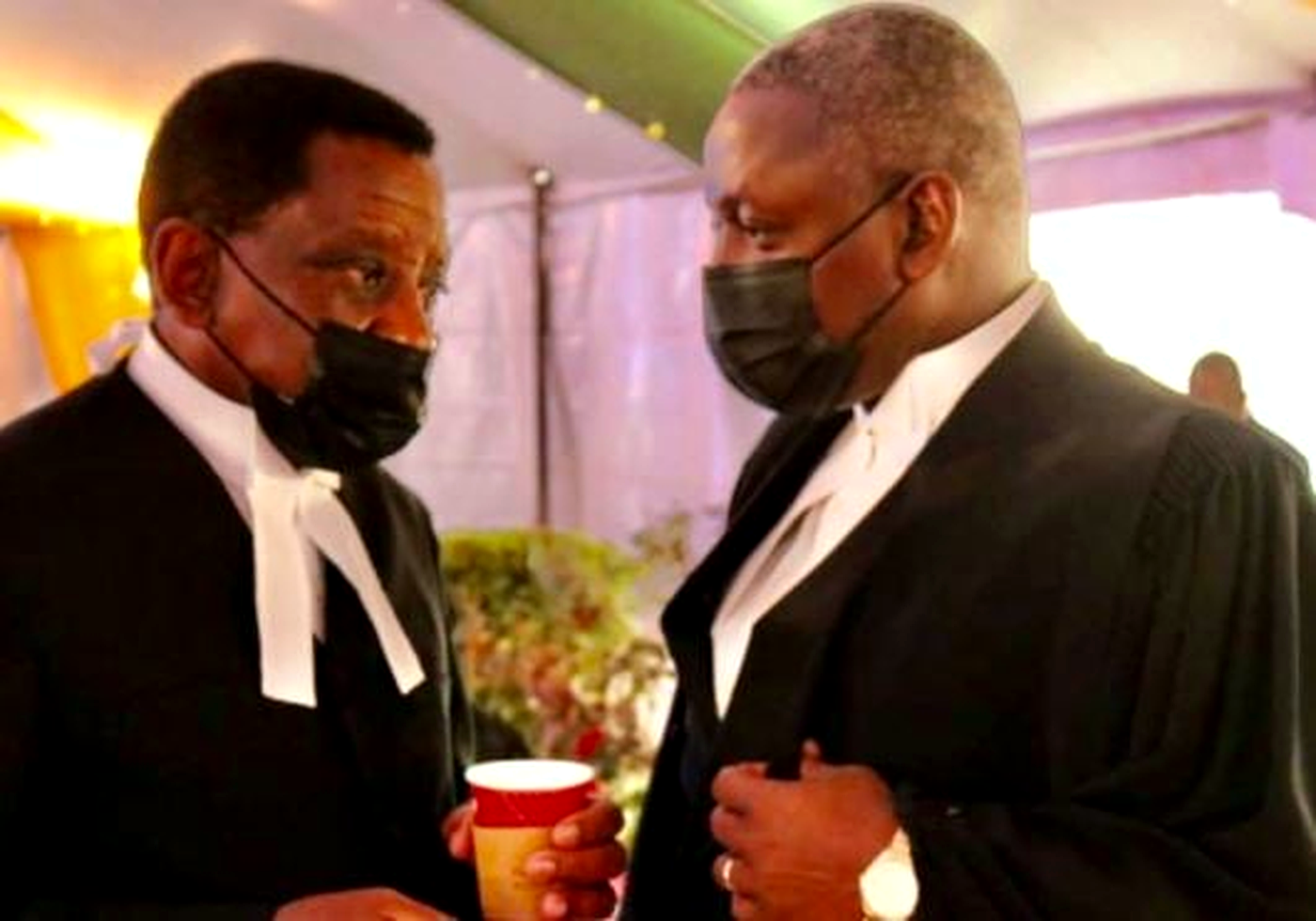
When MP Otiende Amollo stood his ground to persuade the National Assembly on the unconstitutionality of some provisions, his Party did not take it lightly. Shortly thereafter he was ejected from deputizing the chair of the influential justice and legal affairs committee. It is also highly speculated that the same fate may befall MP James Orengo where it is expected he may be axed from his position of Senate minority leader.
If social media reactions by ODM supporters, and the expedient eviction of Otiende Amollo from JLAC are anything to go by, it is evident that these two MPs have been accused of being ODMs fifth-column. This has further been underscored by Raila’s spokesman who labelled them as demagogues who are only known for discussing politics in flawless English and legal jargon. It has been imputed that their actions amount to undermining Raila Odinga which in itself is a set up for the party’s disintegration.
As with everything else, the use of the term quinta columna has evolved. It is no longer so much an insidious group of spies or traitors, but it is also a threat by a smaller group which operates in secret within a larger group to help further a cause which they secretly support. This precipitates the incumbent power to miscalculate and overreact.
The deeper logic
Begs the question, are MPs James Orengo and Otiende Amollo ODM’s fifth-column? Did ODM party leader Raila Odinga and his foot soldiers miscalculate and overreact in their eviction of Otiende Amollo from JLAC? Are we heralding a new dawn of publicly exposing the cracks within ODM? And are the MPs acting at the behest of ‘enemy’ external forces? You be the judge.
I submit that neither MPs are the fifth-column. If proven wrong, I am willing to eat humble pie. But I proffer that they are suffering from a crisis of conscience. This is a struggle and dilemma between loyalty to your political party deities, and loyalty to your conscience.
In the lifetime of any human being, there is a defining moment, time and circumstance that compels one to see beyond the external appearance of an organization, and recognize its true character, motivating force, pattern of response to disagreements or challenges and its inner spirit. When we choose not to ignore this moment, the only recourse is to dissent.
Dissent is primarily associated with critical thinking, or thinking for oneself and questioning the accepted beliefs of authority, truth, and meaning. To think for oneself involves taking positions that contrast with the expected authoritarian position. If allowed to organically occur, it develops into effective public reasoning, which is necessary for determining the legitimacy of the actions of the State or the customs and practices of a society.
But dissent has a price. It attracts danger, risk of political persecution, a split society or even death. It is not always perfect nor successful. It is inherently difficult and often traumatic. However, when a ruling class is strongly repressive, dissent becomes the only way for that society to start to correct the injustices.
In times of crisis, dissent becomes both legitimate and imperative. From democracy, to women’s rights, to the freedom of press, and the rule of law, these liberties have been largely acquired and enjoyed through dissent.
Dissent ended apartheid in South Africa; gained equal civil rights and social acceptance for Black Americans through the civil rights movement; put the sun at the center of our universe through Galileo; transitioned Poland, Hungary and East Germany into modern free nations; inspired hope and courage through the Tank Man in Tiananmen Square; and saved the life of Moses who later liberated the Israelites from slavery. History is unimaginable without dissent.
Yet, we don’t regard dissent as a valuable phenomenon. Instead, the emphasis is on loyalty; blind loyalty to the party; to the party position; and to the party leader. And to choose the path of blind loyalty, is to choose the path of a relatively trouble-free, but un-free life. However, dissent attempts to challenge existing unjust power structures, so that something more just or truthful can take its place.
In an ideal world, where there is no injustice, inequality, and where fidelity to the law is the norm not the exception, there would be no need for political or social dissent. However, as underscored by Freedom House, over half the world lives un-free or only partially free lives; and even in more freer societies, freedoms are often under pressure.
The nation is facing a moral and legal crossroads crisis. It is such moments that a country requires people of deep conviction to act in good conscience, their past actions notwithstanding. James Orengo and Otiende Amollo have become the latest face of dissenters in the struggle and dilemma to hold true to personal conscience, in the face of pressure from political authority. There have been many others before them. And the two, certainly will not be the last.
The final test
Though they may not receive much sympathy from the society, they and others before them have demonstrated that to question, to challenge, to verify, and to demand accountability, ought to be the duty and right of every citizen. And that these rights should never be taken away. Because when they are, we become a moribund society that dies ever so slowly from within.
Finally, my unsolicited advice is to the politicos and their lackeys who choose the path of a relatively trouble-free, but un-free life. An appeaser is one who feeds the crocodile, hoping that it will not eat him last.
Freedom is hammered out on the anvil of discussion, dissent and debate – Hurbert H. Humphrey