“But where will I go master?”
As a young boy, Conan watched his parents slain, his village plundered, his tribe destroyed, and himself captured into slavery by Thulsa Doom, a savage warlord and sorcerer, in the film Conan the Barbarian.
The public story
Together with others that were captured during this raid, Conan was chained to the Wheel of Pain. This was a large grain mill that was powered by slaves. Their hands were shackled to the posts of the mill and they would continuously rotate the mill endlessly. The slaves only gained their freedom from the mill once they were bought by other slave owners, or when they died from the physical demand of the mill.
Conan pushed the Wheel of Pain for two decades. He was the last slave left still contributing labor until he was bought by a large warrior named Red Hair.
Conan remained completely subservient to his new master, even after being unshackled from the grain mill. He was thrown into a pit with another slave who tried to kill him. When Conan succeeded in killing the other slave, his master made him fight other slaves to death as a form of entertainment. Conan excelled at this blood sport and gained the admiration of the crowds and his master.
One day, Conan was woken up by his master in the middle of the night. His master told him he was now free and sent him off into the night. Conan was in shock. He felt hurt by his master’s action. He begged his master not to send him away.
“But where will I go master?”, he asked.
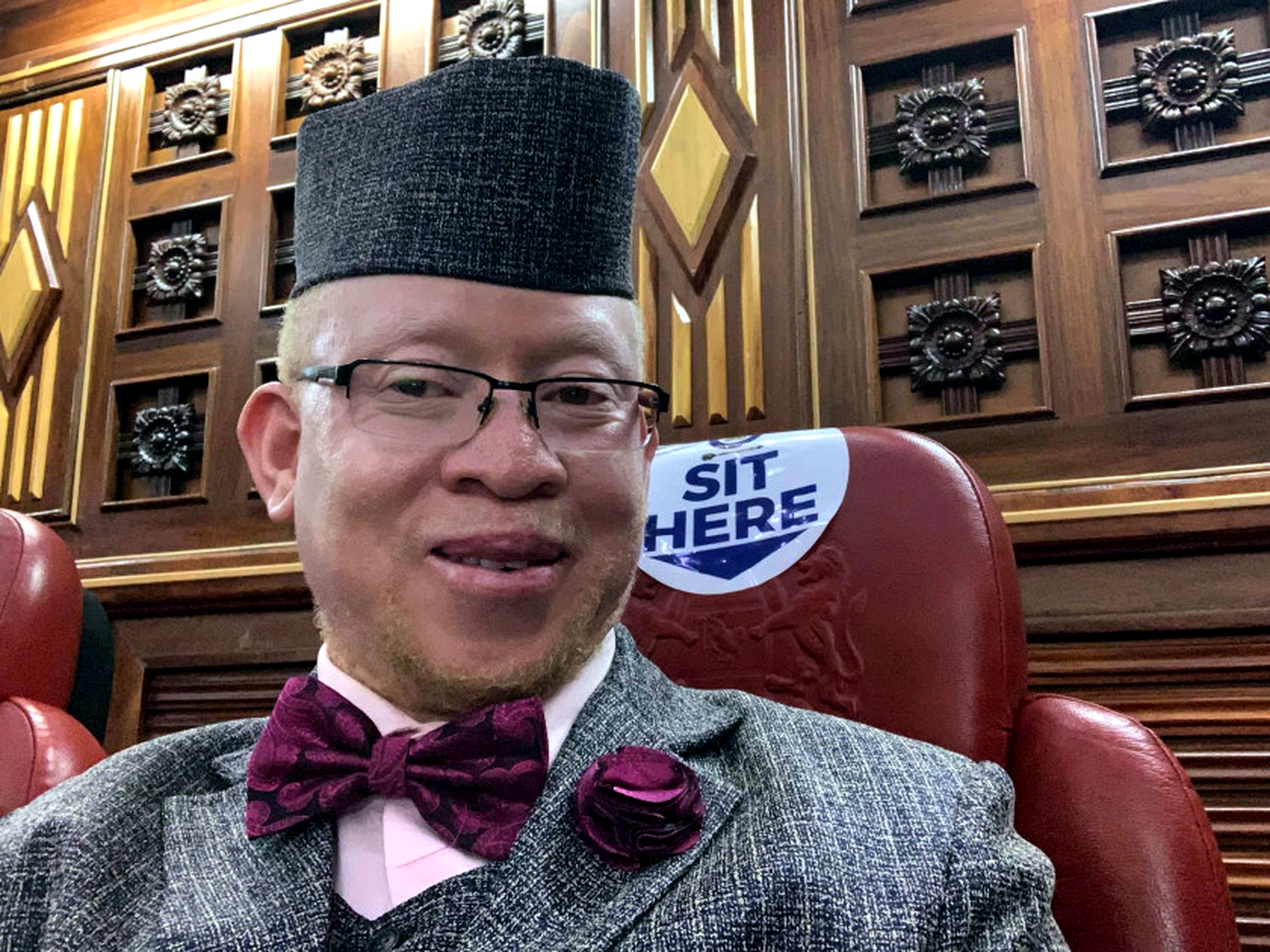
This week, a nominated Senator, Isaack Mwaura, lost his seat in Parliament after his political party, Jubilee, expelled him from the party. It was reported that his party accused him of supporting and campaigning for a candidate of a different political outfit, contrary to party expectations.
Mwaura fought his expulsion in a lengthy legal process up until the date the Senate was voting to pass the Constitution of Kenya (Amendment) Bill, 2020 in Parliament before it can be subjected to a plebiscite. Mwaura voted in support of the Bill, despite being perceived as a supporter of the mutating ‘No’ camp. Unfortunately, it was too little too late, and the die had been cast.
“But where will I go master?”, he seemed to be asking through the lengthy litigation process that he pursued.
Through this expulsion, Mwaura was being set free by his master. He was being unshackled. His political chains were being broken. He was being given an opportunity to truly recreate himself. But like Conan, Mwaura was hurt by his master’s action. He even jubilated on social media when the High Court issued an order that injuncted his expulsion. And in the same vein, he even promised to be loyal to his leaders. Like Conan, he was pledging subservience to his masters. Mwaura was begging his master not to send him away.
He was choosing continued captivity to liberty.
We call them honorable and when familiarity sets in, we give them pet names like mhesh. They get priority services including Covid-19 vaccinations, drive big cars, inhabit fancy homes in leafy suburbs. and pocket enviable emoluments and perks.
The deeper logic
At face value, they portray a celebrity status that many aspire for, many would kill for, and many would sell their soul for. They represent society’s crème de la crème of the most learned, the most eloquent, the most privileged, the most fortunate, and the most wealthy.
However, beneath the surface, if recent events are any indication, they are bound in chains by their political masters. They live an enslaved life. They cannot, and will not exercise the fundamental basis of democracy to hold a divergent belief that is contrary to the position held by their party leaders. And when they dare, they are de-whipped from party and parliamentary positions, summoned to be chastised by a labor union leader, or expelled altogether from their political parties.
Begs the question, what will it profit a politico to pursue a transient celebrity status, but lose his independence of mind, while living a life of fear and intimidation? And should Kenya’s ideologies and priorities be shaped by Wanjiku’s voice through their elected representatives, or by the position held by the political party leader?
We have always been reminded that we are a democratic nation. And yes, in a five-year election cycle, we are a democracy on only one day out of 1,825 days. That is the day of elections, after which our governance system morphs into a government of the people by the ruling party, for the ruling party.
I submit that Mwaura, and others in his situation or likely to be in his situation, should slap enough adult into themselves, and stop groveling to remain in captivity. Instead, they should embrace their newly found freedom and run unshackled towards the center, where victories are won. Allow me to unpack this by offering Mwaura a free political economy 101 tutorial.
Contrary to popular belief, the real winners in any election are not the majority voters. They are the median voters. They always get the exact outcome they want. A majority voting mechanism will always select the outcome that is preferred by the median voter. This means that where you have two opposing sides of roughly equal size in a binary choice contest, the electoral competition pulls both parties towards the issues that those in the middle are passionate about. And the reality is that the median voter is the most typical voter in any society.
If a candidate’s supporters are not enough to carry him to victory, that candidate cannot count on his opponent’s supporters. So they need to appeal to the voters that have no strong leanings towards either party, but all the same, have preferences that neither party is addressing. The candidate that addresses their issues, ultimately persuades them to lean towards their side. And this is how come the median voter always gets the exact outcome they desire.
You see, the voters that support either party or candidate at a 100% leaning, will not budge no matter what carrot or stick is dangled towards them. They will vote for their party or candidate whether they have been shortchanged or not. Their candidate has those votes in the bag. And pandering to them would be akin to preaching to the choir.
Therefore, to clinch a decisive victory in a zero-sum election, a candidate needs to deduce what the median voter’s issues are, and package their political persuasion pitch around them. Their goal should be to charm the median voters who are the majority of the typical voter in any society. And because the middle is where the contest is won.
As the electorate, we have a sad history of supporting a political wave. This makes us complicit in enslaving those seeking electoral offices, because to clinch and retain those electoral seats, the politicos are forced to loot, to conform and be subservient to their political masters impulses and inclinations, as opposed to representing our interests.
The final test
We as the electorate therefore need to do our bit in ending this political slavery. We need to shift our focus from political parties, political leaders or tribal king pins. If we desire to have our interests safeguarded even under extremely difficult circumstances, we need to support a majority of independent candidates who will not be beholden to any party leader, party position or tribal kingpin; but will be accountable to the electorate.
Finally, my unsolicited advice is to Mwaura; a hungry man is dangerous, which is why masters prefer fat slaves. Since today’s slavery is of the mind, the chains are not readily visible. But if the slave gets too hungry, he just might start questioning his predicament. Free your mind. Chart your political path as an independent candidate. It is better to starve free than be a fat slave.
Emancipate yourself from mental slavery, none but ourselves can free out minds – Marcus Garvey