In late 1992, United States Senator Bob Packwood of Oregon faced multiple accusations of sexual harassment from women who had worked with him across two decades. When the accusations became public through a sweeping exposé by The Washington Post and the pressure for an apology became unavoidable, Packwood issued a series of public statements of evasive remorse whose primary defensive sentence stated, "I'm maximizingly sorry if I've done anything that has offended anyone."
By grounding his entire response in that conditional clause, the responsibility for his actions was placed entirely on the people who had been harmed. Their offence was framed as a subjective choice they were making rather than an objective reality he had caused. He was insulated from accountability. His apology was structurally incapable of acknowledging a wrong because it was designed to deny that a wrong had been committed.
The public story
Packwood later resigned from the Senate three years later after the Ethics Committee produced 10,000 pages of evidence against him.
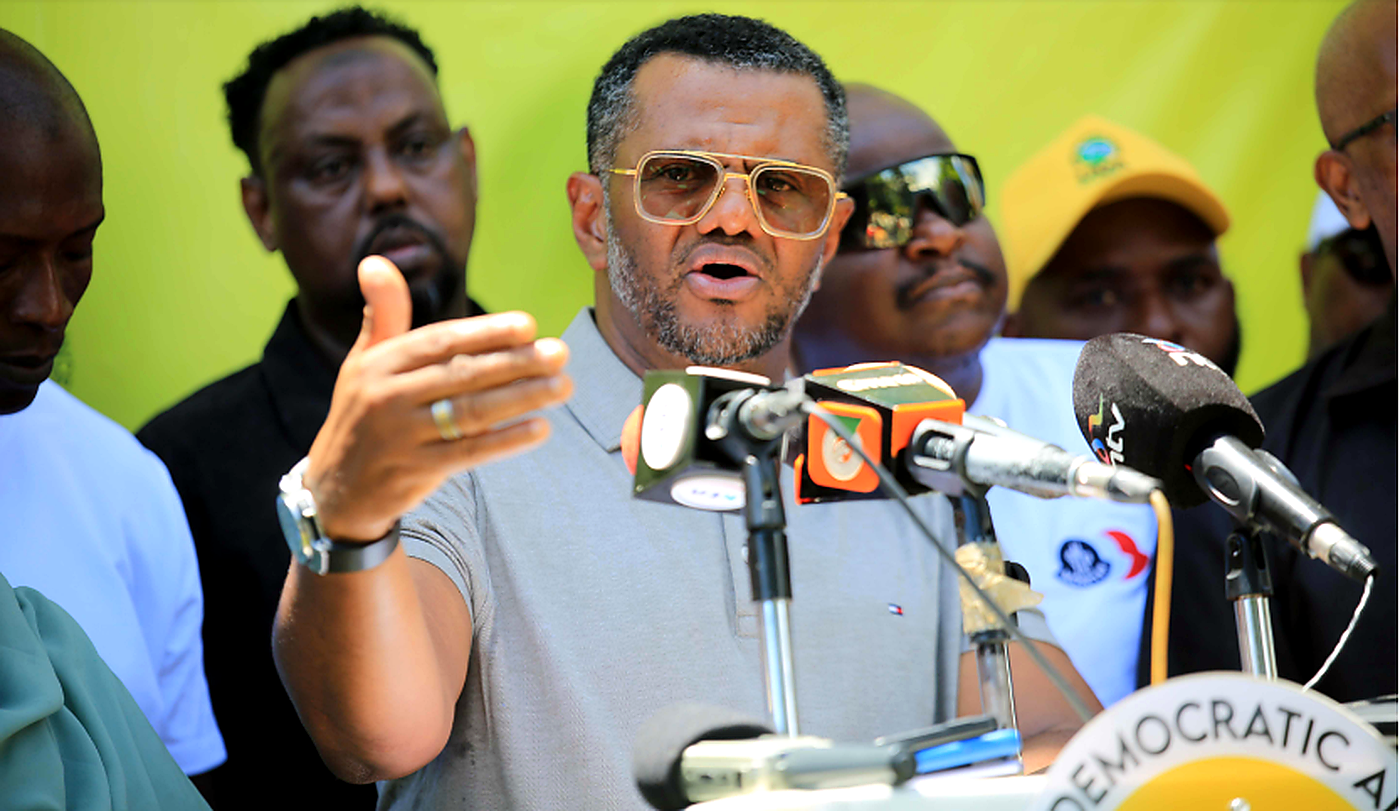
Fast forward to last week, when UDA Secretary General and former Mombasa Senator Hassan Omar issued what he called a public apology after backlash over remarks critics described as ethnic baiting and divisive rhetoric. Omar said his comments had been “misinterpreted and taken out of context,” insisted they were never intended to target any community, and like Senator Packwood before him added, “to all those who may have been offended, I sincerely regret the misunderstanding.”
Both Senators said they would be sorry, conditionally, in the subjunctive mood, if someone chose, as a personal decision, an exercise of free will, to take offence, shifting the responsibility on the listener. That was not an apology. It was a well-structured non-apology apology.
There is well-documented in clinical psychology and it’s called the DARVO non-apology apology, Deny, Attack, Reverse Victim and Offender. It describes the response pattern of people confronted with accountability for harmful behaviour. The offender denies the behaviour or its harmfulness. They attack the credibility or motives of those raising the concern. Then they reverse the victim and offender positions, so that by the end of the exchange, the person who caused harm has repositioned themselves as the one being unfairly targeted.
The offended party then finds themselves being asked to apologize for the offence of having been offended.
Omar's apology is a masterclass in all three moves.
The denial is embedded in the intent defence. He insists that his remarks were never intended to target any community. The behaviour is not denied outright, but the harmful character of his remarks is denied by substituting the question of impact with intention. This is a sleight of hand that sounds reasonable until you examine it. A driver who runs a red light and injures a pedestrian does not escape accountability by saying he never intended to cause harm.
The pedestrian's broken leg is not cancelled by the driver's good intentions. Intent is relevant but it is not the only relevant fact. Impact matters independently because in public life, intention is not a fire extinguisher. You do not light dry grass and then explain that you meant warmth.
The attack is subtler but present. His statement insists his critics misread his words and stripped them entirely of their original context. To say your critics misread you is to attack their competence or their good faith. It implies that the controversy was generated not by what you said but by the analytical failure or deliberate distortion of the people who heard it. From Omar’s perspective, his critics are manufacturing a grievance from a misreading where they are failing to understand the context of his remarks.
But in Kenyan politics, “context” has become the emergency exit of the politician whose words travelled further than intended. It is the sanctuary of the exposed sentence that allows the offender to suggest that the problem was not the statement, but the audience’s failure to understand it properly.
The reversal of victim and offender is the most elegant move and the one that requires the most careful reading to see. By the end of Omar's statement, he is the man whose long-standing advocacy for Coast land justice has been willfully mischaracterized, and whose commitment to national unity has been unfairly questioned. The communities who felt targeted have become, in the DARVO architecture, the aggressors. Omar did not merely refuse to apologize but instead converted his faux apology into a counter-accusation and issued both in the same statement.
The DARVO non-apology does not ask for forgiveness. It asks the offended party to apologize for the offence of having been offended.
What makes Omar's DARVO non-apology apology particularly instructive is the delivery system. There is an old unspoken rule in Kenyan politics that goes, when the room is friendly, speak in ethnic shorthand, but when the country is listening, speak in constitutional prose. Our politics operate as a dual-market system in which a politician must sell one product to the localized ethnic or regional base, and a completely different product to the nation.
The deeper logic
The regional base demands aggressive, zero-sum resource guarding, while the nation demands a performance of constitutionalism, cohesion and contrition.
Omar’s remarks were the ethnic shorthand of the friendly room. The shorthand did its work, signaling solidarity, activating grievance, building the emotional bond between speaker and base that is the primary currency of Kenyan political performance. The DARVO apology is what the dual-market system produces when the friendly room is exposed and when smartphones carry the shorthand to the national audience before the constitutional prose can be deployed.
The apology becomes the second product, issued to the second market, once the first product has already been delivered and its emotional dividend collected.
This is how we end up with apologies that are neither confession nor correction. They are political insurance. The first statement earns the emotional dividend from the base, the apology reassures coalition partners, softens headlines, and gives supporters a line to repeat, “but he apologized.” Case closed, even when the apology has corrected nothing in the original logic.
This is the real function of the DARVO non-apology apology. It allows politicians to keep both markets. The local audience keeps the wink while the national audience gets the statement. The base hears courage. The country hears regret. And life quickly moves on.
Begs the question. Should Omar have apologized?
I submit he should have but not like he did. A sincere apology would have said, “I was wrong to use language that appeared to target a community. The Coast land question is legitimate and must be addressed through law, evidence and institutional reform, not ethnic insinuation. I withdraw the remarks and will pursue the issue in a way that does not expose any community to collective blame.”
Now that is a mea culpa. What the nation received was an exercise in controlled retreat.
This moment would be worth more attention if it were unusual. Sadly it is not. The NCIC has even published a documented lexicon of hate speech terms employed in Kenyan public life ranging from madoadoa to watu wa kungoa reli to nywele ngumu, each followed by the same architecture starting with the exposed friendly room statement, the national backlash, the DARVO apology, the NCIC summons, the non-prosecution, and then lather, rinse, repeat.
The cycle persists not because no one knows how to stop it, but because someone in the room is profiting from its continuation.
The easy defence on Omar specifically is that he was speaking about land injustice at the Coast which is undeniable. It is one of the most enduring wounds in Kenya's state formation, encompassing dispossession, absentee ownership, settlement politics, elite capture, documentation failures and generations who have lived with a strange legal relationship to the soil beneath their feet. That conversation must happen.
But notice what the DARVO framing does to it. The moment a legitimate structural grievance is processed through ethnic accusation, the grievance becomes easier to dismiss, and the real culprits from the cartels, the colonial settlement schemes, the corrupted legal and administrative machinery all disappear entirely from the frame. And the ordinary citizen of the community being blamed is suddenly conscripted as a defendant in a crime they did not design.
This leads to the victim of the original injustice being betrayed twice, first by the historical wrong, and then by the politician who converts that wrong into tribal theatre. The DARVO non-apology apology then completes the cycle by converting the politician from perpetrator into victim.
This is the anatomy of the DARVO non-apology apology. It’s a complete, self-reinforcing mechanism that begins with a deliberate act, passes through a structured evasion, and ends with no accountability, leaving the original injustice exactly where it was, the original wrong unnamed, and the system that produced both, intact and ready for the next cycle.
The final test
Finally, my unsolicited advice is to Wanjiku. The DARVO non-apology apology only works because we keep accepting it. We are not uninformed about this cycle. We are complicit in it. The day it stops working is the day we hold the standard of a genuine apology that is an active voice, named act, no subjunctive, and no DARVO. That day does not require a new law or a new government. It only requires that we are tired enough to stop being entertained by a performance that has been running, at our expense, for many years.
Are you tired yet?
Apology is only egotism wrong side out - Oliver Wendell Holmes Sr.